

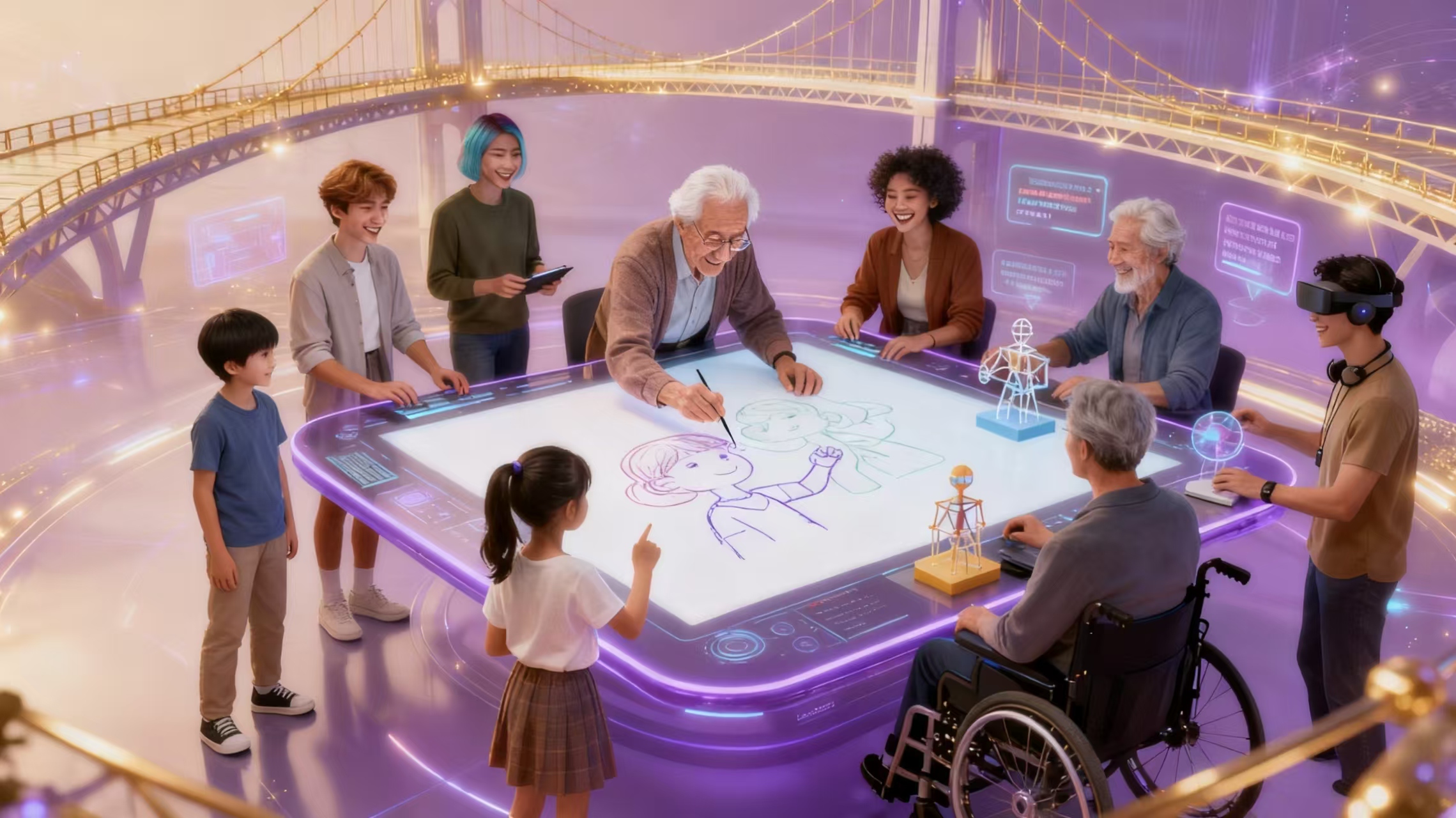
The metaverse was once marketed as a “universal digital space”—a realm where anyone, regardless of background, ability, or resources, could connect, create, and thrive. Yet the reality has fallen short: early metaverse experiences were designed for a narrow audience—tech-savvy users with access to high-end VR hardware, stable internet, and the time to navigate complex interfaces. For billions worldwide, the metaverse remained a distant concept, blocked by financial, technical, and accessibility barriers. Today, a new wave of industry innovation is rewriting this script. Led by pioneers like DBiM, the metaverse is evolving into an inclusive ecosystem that prioritizes accessibility, affordability, and cultural relevance—ensuring that digital participation isn’t a privilege reserved for a few, but a right extended to all.
The Inaccessibility Crisis Holding Back the Metaverse
The metaverse’s failure to reach mainstream audiences stems from three interconnected barriers that exclude marginalized users, small businesses, and underserved communities:
1. Prohibitive Cost Barriers
High-end VR headsets (often priced at $800 or more), powerful gaming PCs, and recurring platform subscriptions create a financial barrier for most users. A family in a developing country, for example, can’t afford to spend a month’s income on VR hardware to access a virtual concert. For small businesses, the cost of building a metaverse presence—hiring developers, designing 3D assets, and maintaining a virtual space—can exceed $50,000, putting it out of reach for SMEs that make up 90% of global businesses. This cost inequality has turned the metaverse into an “elite club,” with only 12% of global internet users having access to the tools needed to fully participate, per a 2024 UNESCO report.
2. Technical Complexity and Digital Divide
Even for those who can afford hardware, the metaverse’s technical complexity is a deterrent. Most platforms require users to navigate convoluted setup processes, learn new interaction mechanics, and troubleshoot technical issues—skills that assume a baseline of digital literacy. Compounding this is the global digital divide: 37% of the world’s population lacks access to stable, high-speed internet, making even basic metaverse experiences (like streaming a virtual event) impossible. For users with disabilities, the gap is wider: most metaverse platforms lack screen reader compatibility, closed captions, or adaptive controls, excluding people with visual, auditory, or motor impairments.
3. Cultural and Linguistic Exclusion
Early metaverse experiences were designed around Western cultural norms and languages, alienating non-English speakers and diverse communities. A user in Japan might struggle to navigate a virtual store with no Japanese translation; a creator in Nigeria might find that metaverse content templates don’t reflect local aesthetics or cultural traditions. This one-size-fits-all approach means that non-Western users often feel like “outsiders” in the metaverse, with few opportunities to see their identities or cultures represented. A 2024 survey of non-English-speaking metaverse users found that 74% had abandoned platforms due to “lack of cultural relevance” or “poor language support.”
Building an Inclusive Metaverse: Solutions That Leave No One Behind
Forward-thinking players like DBiM are addressing these barriers with a holistic approach that prioritizes affordability, simplicity, accessibility, and cultural responsiveness. Their solutions are designed to meet users where they are, rather than forcing them to adapt to the metaverse.
1. Low-Cost, Multi-Device Access: No VR Required
The biggest shift toward inclusivity is the move away from VR-only access. DBiM and other leaders are building metaverse experiences that work on devices people already own—smartphones, tablets, and basic laptops—eliminating the need for expensive hardware:
- Web-Based and Mobile-First Experiences: Users can access metaverse events, stores, and workspaces via a web browser or lightweight mobile app, with no downloads or specialized hardware required. A farmer in Kenya can join a metaverse agricultural workshop on their smartphone; a student in India can attend a virtual lecture on a budget laptop.
- Scalable, Low-Bandwidth Design: Metaverse experiences are optimized for low-speed internet, with compressed 3D assets and text-based alternatives for streaming content. This ensures that users in regions with spotty connectivity can still participate, without facing lag or crashes.
- Affordable Enterprise Tools: For small businesses, DBiM’s SaaS platform offers low-cost, no-code metaverse building tools—starting at $20 per month—that let SMEs create virtual storefronts or training spaces without hiring developers. A local café in Mexico, for example, can build a virtual menu and host online events for just a fraction of the cost of traditional digital marketing.
This multi-device approach has expanded access dramatically: DBiM reports that 78% of its users access the metaverse via smartphones, and 60% of its enterprise clients are SMEs—proving that the metaverse can be accessible to businesses of all sizes.
2. Simplified, Accessible Design for All Users
Inclusivity means designing for users with varying levels of digital literacy and ability. DBiM’s metaverse AI OS integrates accessibility features and intuitive design principles to ensure no one is left out:
- Guided Onboarding and Simplified Interfaces: New users are greeted with step-by-step tutorials (available in text, audio, and video) that walk them through basic actions—like moving their avatar or joining a conversation. Interfaces use large, clear buttons and minimal text, reducing cognitive load for users with limited digital skills.
- Disability-Inclusive Features: Platforms now include screen reader compatibility, closed captions for all audio content, and adaptive controls (e.g., voice commands, simplified gesture controls) for users with motor impairments. A visually impaired user can navigate a virtual store using audio cues; a user with limited mobility can control their avatar via voice commands.
- AI-Powered Support: 24/7 AI chatbots (available in 40+ languages) provide real-time assistance, answering questions and troubleshooting issues without requiring users to wait for human support. This is critical for users who don’t speak English or have limited access to technical help.
These features have made the metaverse accessible to users with disabilities: DBiM’s accessibility audit found that 92% of users with disabilities could complete core tasks (like making a purchase or joining an event) without barriers—far above the industry average of 45%.
3. Cultural and Linguistic Relevance: Reflecting the Global User Base
The metaverse can only be inclusive if it reflects the diversity of its users. DBiM and other platforms are prioritizing cultural responsiveness and multilingual support to create a space where everyone feels seen:
- Multilingual Content and Localization: Metaverse experiences are translated into 50+ languages, with region-specific content that reflects local cultures. A virtual marketplace in Southeast Asia features local artisans and traditional designs; a metaverse school in Brazil offers courses in Portuguese, with culturally relevant case studies.
- Community-Led Content Curation: Local communities are empowered to curate metaverse content, ensuring that cultural traditions and values are respected. For example, a metaverse festival in South Africa is organized by local creators, featuring traditional music, dance, and art—rather than a Western-centric interpretation of African culture.
- Regional Payment Options: To serve users in countries with limited access to credit cards, metaverse platforms integrate local payment methods—mobile money in Kenya, e-wallets in India, and cash payments in Mexico. This ensures that users can participate in the metaverse economy regardless of their financial infrastructure.
This cultural relevance has driven adoption in underserved regions: DBiM’s user base in Africa and Latin America has grown 300% in 2024, with 85% of these users reporting that the platform “feels designed for people like them.”
The Inclusive Metaverse: A Catalyst for Global Opportunity
The metaverse’s shift toward inclusivity isn’t just a moral imperative—it’s an economic and social opportunity. By opening access to billions of users and small businesses, the metaverse can become a catalyst for global economic growth, education, and connection:
- For individuals in underserved communities, the metaverse offers access to education and job training that isn’t available locally. A young adult in rural Bangladesh can take a metaverse coding course and land a remote job; a farmer in Ethiopia can learn sustainable agriculture practices via virtual workshops.
- For small businesses, the metaverse provides a low-cost way to reach global audiences. A handmade jewelry maker in Peru can sell their products to customers in Europe and Asia via a virtual storefront, bypassing traditional export barriers.
- For marginalized groups, the metaverse offers a space to build community and advocate for change. LGBTQ+ youth in conservative regions can connect with supportive peers in virtual safe spaces; Indigenous communities can preserve and share their cultural heritage via metaverse museums and events.
The metaverse’s true potential lies not in creating a separate digital world, but in building one that is more inclusive than the physical world—one where access to opportunity isn’t limited by geography, income, ability, or identity. Leaders like DBiM are proving that inclusivity isn’t an afterthought; it’s a core design principle that drives growth, innovation, and social impact. As the metaverse continues to evolve, the focus must remain on breaking down barriers, centering the needs of marginalized users, and ensuring that everyone has a seat at the table. In doing so, the metaverse can fulfill its promise of becoming a universal space—one that unites, empowers, and enriches the lives of people around the world.
Leave a Reply