

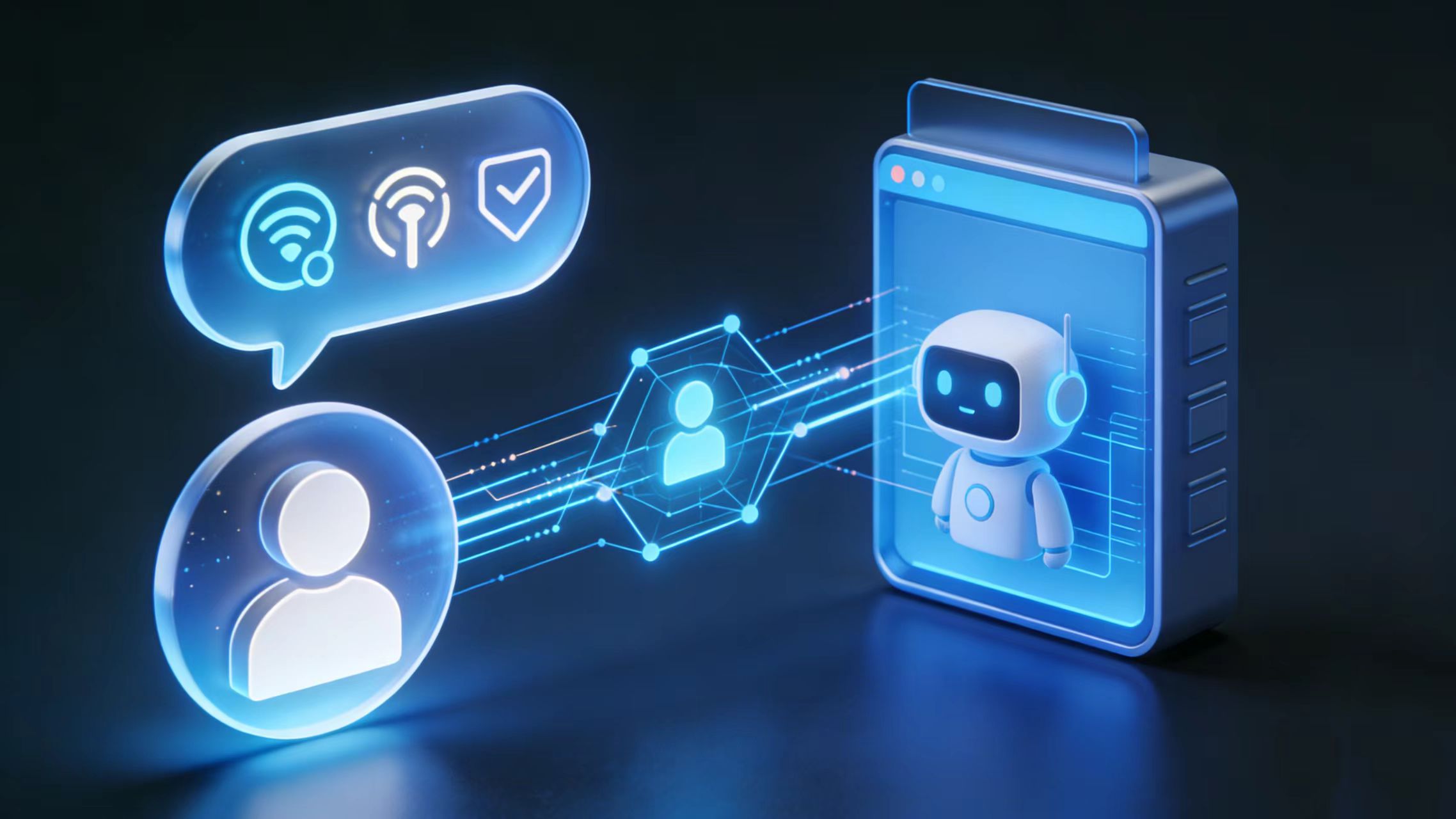
In the metaverse development race, mere technology accumulation and scenario replication are no longer core competitive advantages. While the industry debates the priority of “immersive experience” versus “commercial value”, DBiM has taken a different path—upgrading AI Agent from a simple service tool to the core hub of the metaverse’s underlying operations. Instead of solving isolated problems, it restructures the rules of resource flow, value matching, and collaborative interaction in the digital world, laying a solid foundation for the large-scale implementation of the metaverse and redefining the fundamental logic of the metaverse ecosystem.
Breaking Free from the “Scenario Trap”: DBiM AI Agent’s Infrastructure Mindset
A major misconception plaguing the current metaverse industry is the overemphasis on building specific scenarios—virtual exhibition halls, digital human live streams, metaverse games, and so on. These scenarios often exist as closed loops, with incompatible technical standards, disconnected data, and stagnant value flow, ultimately becoming isolated “digital islands”. This “scenario-first” approach essentially applies traditional internet thinking to the metaverse, ignoring its core appeal as the “next-generation digital space”: breaking boundaries to achieve global collaboration.
DBiM’s solution lies in abandoning the scenario trap and developing AI Agent with an infrastructure mindset. Instead of binding AI Agent to a single virtual scenario, it has built a universal collaborative system that works across platforms, scenarios, and entities. The core strength of this system does not lie in rendering hyper-realistic virtual visuals, but in unblocking the “critical arteries” of the digital world—whether it’s addressing the daily digital needs of individual users, managing supply chains and cross-border transactions for enterprises, or scheduling resources across different metaverse platforms, DBiM’s AI Agent enables seamless, efficient connectivity.
Take a brand’s metaverse new product launch as an example. In the traditional model, brands must invest heavily in building a dedicated virtual venue and developing supporting interactive features, resulting in high costs and low reusability. In DBiM’s ecosystem, however, AI Agent can directly access the modular capabilities of the Metaverse AI OS to quickly integrate virtual space construction, digital human hosting, targeted user traffic matching, and real-time order conversion. It even connects the brand’s offline inventory system with online e-commerce platforms, enabling a closed-loop process from “virtual product launch to online transaction to offline fulfillment”. Here, AI Agent is no longer a supporting role in the launch event, but the infrastructure hub that links all the pieces together.
Three Core Capabilities: Restructuring the Rules of Resource and Value Flow in the Metaverse
DBiM’s AI Agent qualifies as the new infrastructure of the metaverse thanks to its three unique core capabilities, which together restructure how resources and value circulate in the digital world.
1. Cross-Domain Resource Integration Capability: Breaking Down Data and Platform Barriers
The development of the metaverse is hindered by data silos and platform fragmentation. User data, virtual assets, and service capabilities cannot be shared across platforms, leading to extremely low resource utilization rates. Based on its Vision-Language-Action (VLA) architecture, DBiM’s AI Agent can identify information across different interfaces through computer vision and parse the logic of various systems via natural language processing—all without relying on the underlying interfaces of individual platforms. This enables cross-platform data capture, integration, and analysis.
More importantly, DBiM has established a unified resource registration and scheduling mechanism through the Metaverse AI OS. Any idle resources owned by enterprises or platforms—whether it’s the computing power of virtual servers, underutilized virtual spaces, or idle digital human service capabilities—can be registered in the system. AI Agent then intelligently matches these resources to corresponding needs, essentially creating a resource-sharing marketplace in the metaverse. This maximizes the utilization of dispersed resources and significantly reduces the operational costs of the metaverse.
2. Dynamic Value Matching Capability: Enabling Precise Supply-Demand Alignment
In traditional metaverse business models, value matching often relies on manual matchmaking, which is inefficient and poorly targeted. DBiM’s AI Agent, by contrast, achieves dynamic and precise supply-demand matching through big data analysis and intelligent algorithms.
For users, AI Agent actively recommends tailored services and products based on their behavioral preferences and pain points, and can even anticipate their potential needs. For instance, when a user browses a smart device in a virtual exhibition hall, AI Agent automatically pushes virtual trial scenarios, user reviews, and purchase links for that device. For enterprises, AI Agent analyzes market trends and shifts in user demand to provide precise recommendations for product development, marketing strategy formulation, and supply chain optimization. This dynamic matching mechanism—where “demand drives supply and supply creates demand”—ensures that the commercial value of the metaverse is not superficial, but deeply embedded in the core needs of users and businesses alike.
3. Autonomous Collaborative Evolution Capability: Building a Self-Reinforcing Ecological Loop
DBiM’s AI Agent is not a static tool; it is an intelligent entity with autonomous learning and collaborative evolution capabilities. With each resource integration and value matching task, it continuously accumulates data and experience to optimize its algorithm models. Meanwhile, different AI Agents can share information and collaborate seamlessly via the communication protocols of the Metaverse AI OS.
For example, an AI Agent responsible for virtual goods trading can share user purchase preference data with an AI Agent in charge of content creation, which then produces virtual content tailored to those preferences. Similarly, an AI Agent focused on enterprise services can share a company’s supply chain needs with a resource-scheduling AI Agent, which then matches the enterprise with optimal logistics and warehousing resources. This autonomous collaborative evolution capability enables DBiM’s ecosystem to form a self-reinforcing loop: the more capable AI Agents become, the more users and enterprises they attract; the more users and enterprises join, the more data is generated, accelerating the evolution of AI Agents even further.
The Future of New Infrastructure: Making the Metaverse Truly Serve the Real Economy
The ultimate goal of DBiM’s AI Agent-powered metaverse new infrastructure is not to create a virtual world disconnected from reality, but to enable the metaverse to genuinely serve the real economy.
When AI Agent becomes the “water, electricity, and coal” of the metaverse, enterprises will no longer need to invest exorbitant costs in building proprietary virtual systems for digital transformation. Instead, they can access AI Agent capabilities on demand, just like using public infrastructure. For users, digital life will become far more convenient—no longer will they need to switch between multiple virtual platforms, as a single AI Agent can address all their cross-scenario needs.
In the future, as DBiM’s ecosystem continues to open up, more developers, enterprises, and users will participate in building the metaverse’s new infrastructure. At that point, the metaverse will no longer be an “exclusive game” for a handful of tech companies, but a new engine for the digital economy that empowers thousands of industries, truly achieving deep integration and value co-creation between the virtual and real worlds.
Leave a Reply