

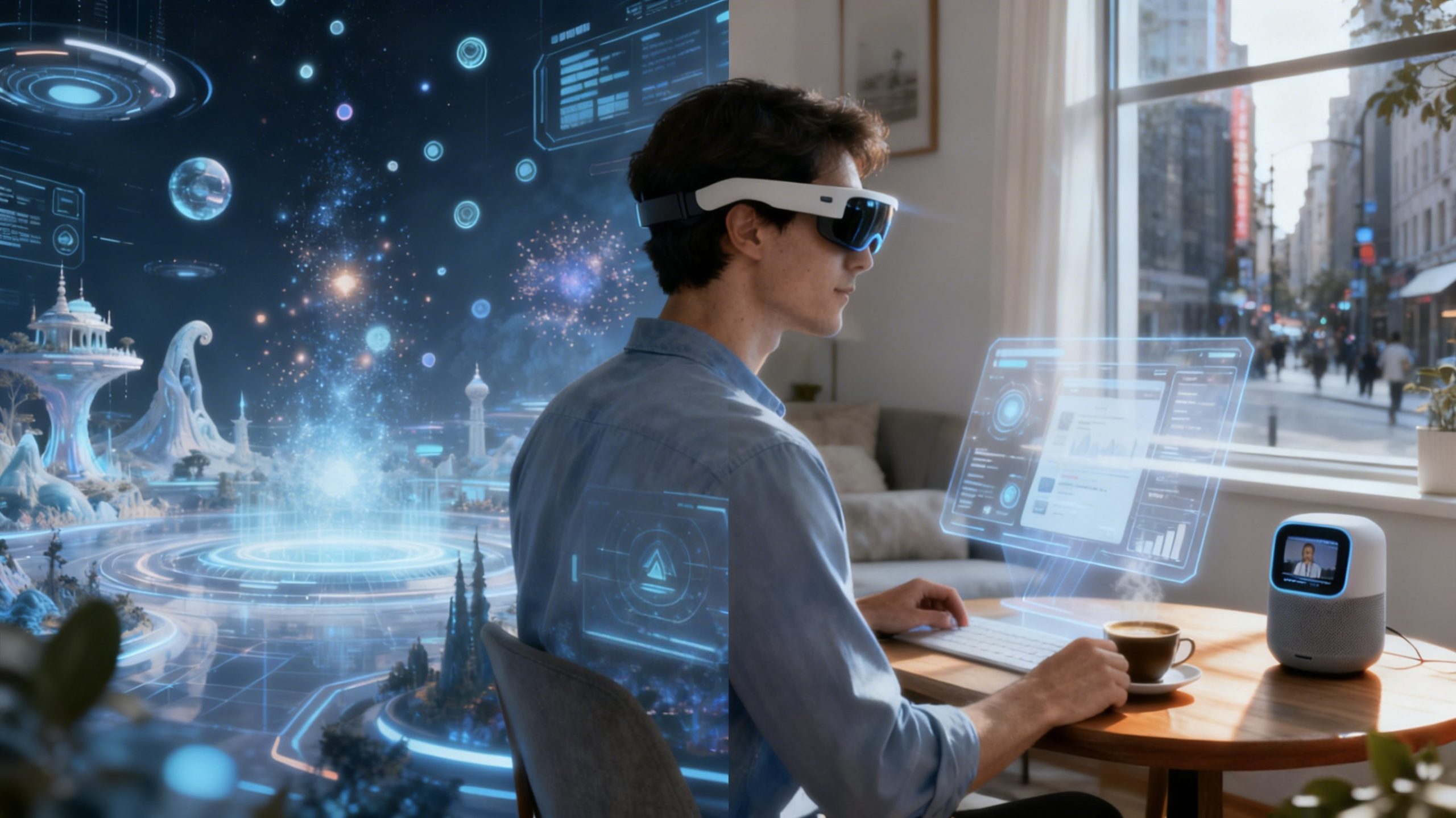
When the term “metaverse” is mentioned, most people’s minds still conjure up scenes of “putting on a VR headset to enter a virtual world”: holding virtual meetings, shopping in virtual malls, and interacting with pixelated avatars in a digital space. However, the reality is that most of these “immersive experiences” remain stuck in the conceptual stage. In daily life, users still rely on WeChat for communication, Taobao for shopping, and Douyin for entertainment. Few are willing to put on a VR headset just for a virtual concert, let alone repeat the process of “creating a new account, learning new operations, and adapting to an unfamiliar interface” on a closed virtual platform.
The metaverse’s “immersive trap” lies in this: it tries to upend users’ existing digital habits, yet overlooks the most core need—solving real-world digital friction. DBiM, by contrast, takes the opposite approach: it does not aim to build an independent “virtual utopia.” Instead, it integrates metaverse technologies (AI, stablecoins, digital identity) into users’ current lives, starting with “solving daily troubles” and turning the metaverse from a “occasional novelty experience” into an “indispensable practical tool.”
The Metaverse’s “Immersive Trap”: Why Users Keep Their Distance from Virtual Worlds
The biggest bottleneck in current metaverse development is not insufficiently advanced technology, but a “disconnect between experience and demand.” Most platforms tout “immersion” as their core selling point, yet they fall into three dilemmas that users cannot accept:
1. “High-Threshold Entry” That Breaks Existing Habits
Want to try a metaverse social platform? First, you need to buy a VR headset costing over a thousand yuan, download a client that takes up more than 10GB of storage, then spend 30 minutes creating an account and customizing an avatar—only to find that none of your real-life friends are on the platform. This “entry barrier” runs counter to users’ inertia: people are accustomed to opening an app with one tap and connecting with contacts instantly, not investing time and money in a “new world” that may not even fit their daily needs. A 2024 industry survey found that 72% of users who tried metaverse apps abandoned them within a week, citing “too much trouble to get started” as the top reason.
2. “Fragmented Experience” That Adds to User Burden
Even without VR devices, many 2D metaverse platforms still force users into fragmented workflows. For example, a user who wants to buy a virtual gift for a friend on a metaverse social app must: 1) Exit their current chat app and open the metaverse platform; 2) Re-verify their identity to log in; 3) Navigate through a complex virtual store interface to find the gift; 4) Use the platform’s proprietary currency (which requires recharging via a separate payment channel). This process takes 15 minutes on average—compared to just 2 minutes to send a red envelope via WeChat. The metaverse, which claims to “simplify life,” ends up adding more steps to users’ daily tasks, leading to what’s known as “metaverse fatigue.”
3. “Empty Immersion” Without Practical Value
Most metaverse experiences focus on “visual spectacle” rather than solving real problems. A virtual concert may have stunning 3D effects, but users still need to buy tickets through a separate website, can’t share the live stream directly to their WeChat Moments, and can’t even save a clip to revisit later. A virtual office allows users to “sit” in a digital meeting room, but it can’t sync with real-world calendars (like Outlook or Google Calendar) or automatically take meeting minutes—functions that users rely on in daily work. This “immersion without utility” makes the metaverse feel like a “digital amusement park” rather than a tool that integrates into life, limiting it to occasional entertainment instead of long-term use.
DBiM’s User-Centric Path: Letting Metaverse Technology Serve Daily Life
DBiM’s breakthrough lies in shifting the metaverse’s focus from “building a new world” to “improving the existing one.” It leverages metaverse technologies (AI, stablecoins, digital identity) to eliminate friction in users’ current digital lives—no VR headsets, no closed platforms, just seamless integration into apps users already use.
1. Starting with “Life Companions”: Solving Small Daily Troubles First
DBiM’s initial step is not to launch a grand metaverse platform, but to deploy AI-powered “life companions” (based on its LAM/VLA architecture) that integrate into users’ daily workflows. These companions act as “smart navigators” for the open internet, handling tedious, repetitive tasks without requiring users to enter a virtual space:
- Smart travel planning: When a user says “I want to plan a 3-day trip to Xi’an next month,” the AI companion automatically combs through flight and hotel information across Ctrip, Fliggy, and Taobao Travel, compares prices and user reviews, filters options that match the user’s budget (e.g., avoiding hotels over ¥800/night) and preferences (e.g., within 1km of subway stations), and compiles a detailed itinerary—all without the user switching between multiple apps.
- Subscription management: Many users struggle with “subscription fatigue”—forgotten memberships for video platforms (iQiyi, Tencent Video) or music apps (NetEase Cloud Music) that keep charging monthly. DBiM’s AI companion tracks all the user’s subscriptions, sends reminders 3 days before renewal, analyzes usage (e.g., “You only used Tencent Video 2 times this month”), and recommends canceling or downgrading unused services—saving users time and money.
These small, practical functions turn the metaverse’s “intelligence” into something users can feel every day, rather than a distant concept. By 2024, early users of DBiM’s AI companions reported saving an average of 2.5 hours per week on tedious tasks—building trust and adoption before expanding to more complex metaverse experiences.
2. Breaking Down Platform Walls: Connecting Existing Digital Scenarios
The biggest pain point in users’ digital lives is fragmentation—data and functions are trapped in separate apps. A user’s shopping history on Taobao can’t be used to recommend products on JD.com; their contact list on WeChat can’t be synced to a metaverse social app. DBiM solves this by building a “connecting layer” (powered by its Metaverse AI OS) that links these isolated platforms—with user consent—while protecting privacy:
- Cross-platform preference sync: If a user often buys eco-friendly products on Taobao, DBiM’s system (with permission) shares this preference with Douyin’s e-commerce module, which then recommends related short videos (e.g., eco-friendly home goods) —no need for the user to manually set preferences on each app.
- Unified digital identity: Instead of creating a new account for every metaverse or e-commerce platform, users have a single “DBiM digital identity” that verifies their identity across apps. When logging into a new virtual store, the identity automatically confirms the user’s shipping address (from Taobao) and payment method (from Alipay) —cutting login and checkout time by 80%.
This “connection without disruption” means users don’t have to “adapt to the metaverse”; the metaverse adapts to them, fitting into their existing habits seamlessly.
3. Stablecoins as a “Value Bridge”: Eliminating Economic Friction
Even small cross-platform transactions can be frustrating for users—e.g., buying a virtual sticker on Douyin and wanting to send it to a friend on a metaverse chat app, only to find the two platforms use different virtual currencies. DBiM’s stablecoin (Dubin Stablecoin) acts as a universal “value bridge” for these scenarios:
- Seamless microtransactions: A user can use Dubin Stablecoin to buy a virtual gift on a metaverse social app, then send it directly to a friend’s WeChat—with the stablecoin automatically converted to the friend’s preferred payment method (e.g., WeChat Wallet balance) if they don’t use the metaverse app.
- Stable value for virtual assets: If a user buys a rare digital avatar accessory on a gaming platform, they can sell it on a digital art platform using Dubin Stablecoin—no need to worry about the platform’s proprietary currency crashing in value. The stablecoin’s 1:1 peg to fiat ensures the asset retains its real-world value, making virtual transactions as reliable as buying physical goods.
Real-World Impact: From “Nice-to-Have” to “Must-Have”
DBiM’s user-centric approach has already turned metaverse technology into a “must-have” for early adopters. A young professional in Shanghai, for example, uses DBiM’s AI companion to: 1) Automatically sort and reply to work emails every morning; 2) Sync his Douyin shopping cart with his Taobao wishlist to compare prices; 3) Manage his monthly subscriptions to 5 apps—all without ever putting on a VR headset or entering a virtual world. “I don’t care about ‘immersive virtual spaces’,” he says. “What I care about is saving time on boring tasks—and DBiM does that.”
For businesses, this approach also unlocks new opportunities. A metaverse fashion brand using DBiM’s platform can now sell virtual clothing directly to users’ Taobao carts, with the AI companion recommending styles based on the user’s past purchases. A virtual concert organizer can let users buy tickets via Alipay and share the live stream to WeChat—doubling attendance compared to closed metaverse concerts.
The metaverse doesn’t need to be a separate “digital world” to thrive. Its true potential lies in integrating into users’ daily lives, solving real problems, and making digital experiences smoother and more efficient. DBiM’s path proves that the future of the metaverse isn’t about VR headsets or virtual utopias—it’s about putting users first, leveraging technology to eliminate friction, and turning the “metaverse” from a buzzword into something that makes everyday life easier. As more users experience this practical value, the metaverse will no longer be a distant fantasy, but a natural part of how we live, work, and connect online.
Leave a Reply