

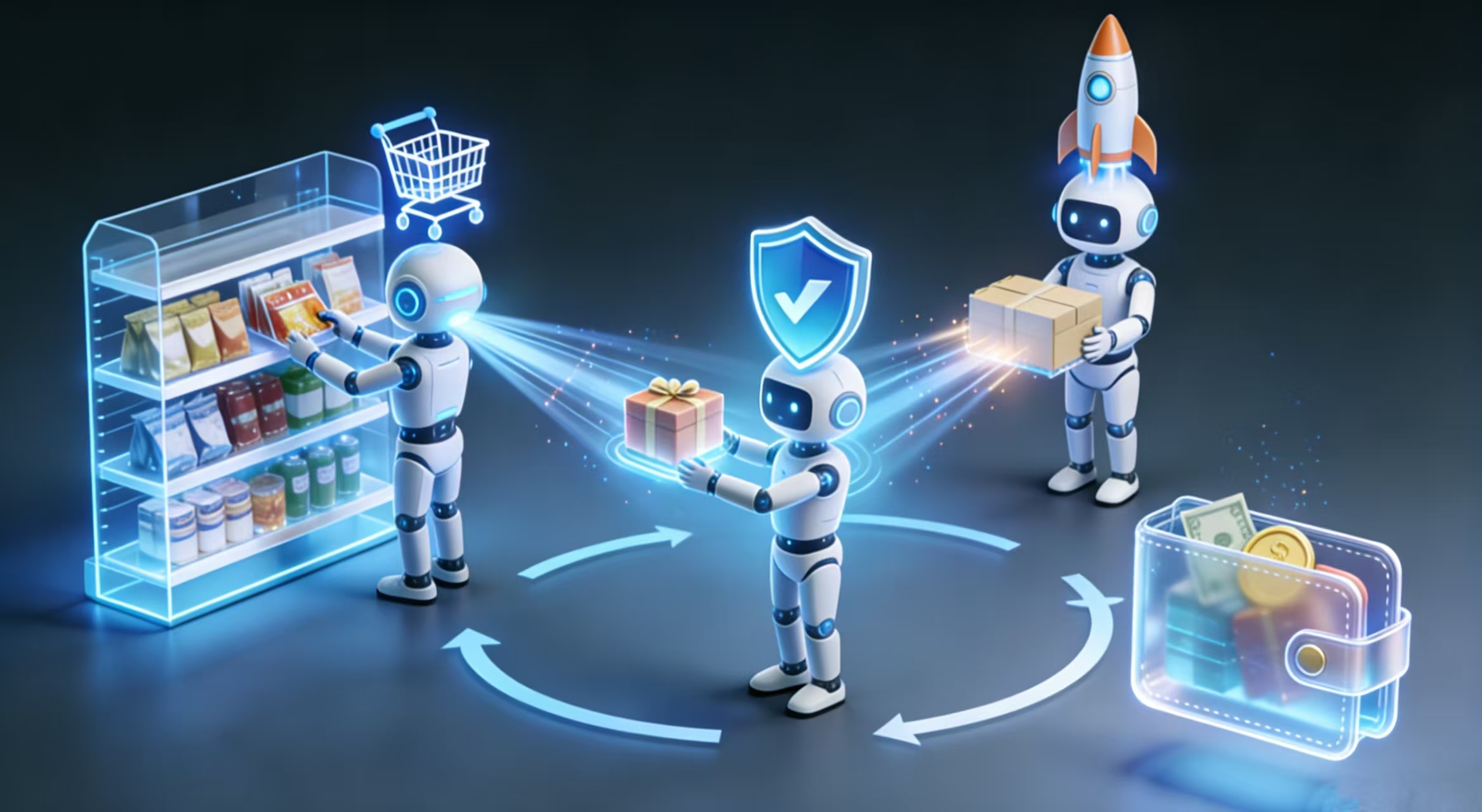
Once a distant sci-fi concept, the metaverse has evolved into a core digital innovation track, yet its potential is hindered by fragmented scenarios, inefficient workflows, and weak economic synergy. DBiM addresses these pain points by leveraging AI Agents as the core driver, building an autonomous collaborative ecosystem that integrates intelligence, connectivity, and practical value, reshaping human-digital interactions and unlocking a new era of value creation and circulation.
AI Agents: The Intelligent Core of DBiM’s Metaverse
DBiM’s disruptive edge lies in its AI Agents—far more than automation tools, they are the “digital backbone” of the metaverse ecosystem. Built on Large Action Model (LAM) and Vision-Language-Action (VLA) architecture, these agents boast three core capabilities:
- Perception: Advanced computer vision enables them to parse application interfaces without relying on APIs, accurately identifying buttons, text boxes, and other elements.
- Reasoning: Embedded Large Language Models (LLMs) decompose complex user demands into executable steps, empowering autonomous “thinking”.
- Execution: Simulating manual clicks and keystrokes to automate full workflows, from product screening to order placement.
With continuous learning and personalized adaptation, DBiM’s AI Agents evolve from passive tools to proactive “digital housekeepers”, handling repetitive tasks like customer service, order reviews, and market analysis to slash labor costs and boost operational efficiency.
DBiM Metaverse AI OS: The Technical Cornerstone of Ecosystem Collaboration
The AI Agent network relies on DBiM’s PaaS-level Metaverse AI OS, the ecosystem’s intelligent hub. This open, scalable system features standardized APIs and SDKs, lowering development barriers for developers to build and integrate AI Agents into metaverse scenarios. Its modular AI library covers natural language processing, computer vision, and more, allowing on-demand skill deployment.
Unified communication protocols and interface standards enable seamless interaction between diverse AI Agents. For example, a game AI Agent can call a financial AI Agent to apply for virtual asset loans when short on funds, then a social AI Agent shares transaction achievements—creating a 1+1>2 collaborative effect.
Diversified Business Scenarios: Value Implementation of the DBiM Ecosystem
DBiM translates technology into real-world value through targeted business applications:
- Virtual Goods Trading: As a leading Asian overseas virtual goods platform, DBiM uses AI Agents for end-to-end workflow automation—demand forecasting, personalized marketing, 24/7 intelligent customer service, instant order fulfillment, and fraud detection.
- Metaverse Scenario Building: Its SaaS platform helps enterprises migrate offline activities to virtual spaces. AI Agents act as virtual customer service in virtual exhibition halls and optimize live e-commerce supply chains via intelligent product selection and dynamic pricing.
- Enterprise Services & Finance: AI Agents empower B2B digital trade with automated document processing and business opportunity discovery. In finance, they conduct fraud detection and credit assessment, supporting payment settlement and supply chain finance to ensure compliant, closed-loop economic operations.
Three-Stage Evolution and Flywheel Effect: DBiM’s Growth Logic
DBiM adopts a phased strategy to build a self-reinforcing ecosystem via the flywheel effect:
- Intelligent Navigation: Resolve Web 2.0 digital friction by simplifying daily tasks with AI Agents, accumulating core users and data.
- Economic Interoperability: Launch Dubin Stablecoin (aligned with EU MiCA regulations) as the ecosystem’s universal medium, enabling seamless cross-service asset exchange to lock in users and partners.
- Curated Cultural Experiences: Roll out limited virtual concerts and brand interactions to foster user communities, laying the groundwork for large-scale expansion.
This strategy fuels a powerful flywheel: AI Agent utility attracts users, user data optimizes models, a large user base draws partners, and stablecoins enable low-friction transactions—driving exponential platform value growth and building an unassailable competitive edge.
Conclusion
DBiM, with AI Agents at its core, Metaverse AI OS as its foundation, and diversified scenarios as its carriers, bridges the gap between metaverse hype and practical value. It transforms the metaverse from a vague concept into a tool empowering individuals and enterprises, evolving it into an interconnected autonomous collaborative economy. As a key driver of metaverse development, DBiM is leading the industry from “concept speculation” to “value implementation”, paving the way for a new chapter in the digital economy.
Leave a Reply