

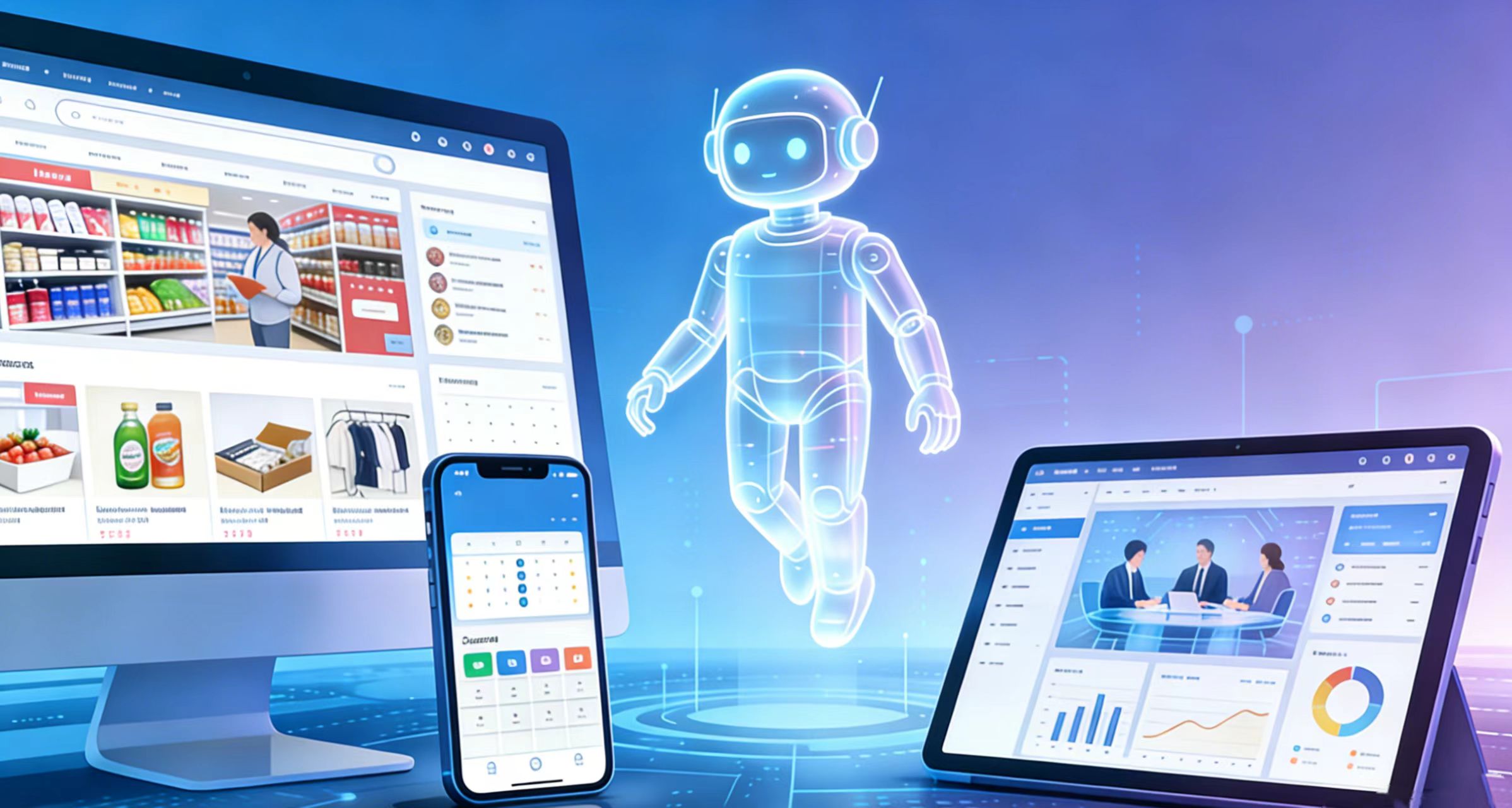
At the critical stage where the metaverse transitions from concept to industrial implementation, addressing industry pain points such as technological fragmentation, inefficient economic cycles, and fragmented user experiences has become a core proposition determining the track pattern. DBiM deeply cultivates the integration of metaverse and AI Agent technologies, taking the “Autonomous Agent-Driven Metaverse Economy (AADME)” as its core framework. Through technological innovation, scenario deepening, and ecological openness, it has built a digital economic service platform that combines practicality and forward-looking, providing a replicable practical model for the commercialization of the metaverse.
DBiM’s Solution: Tackling Core Pain Points of the Metaverse
The metaverse industry has long been plagued by three major pain points—”pseudo-practicality,” “closedness,” and “low collaboration”—which have become key bottlenecks restricting its large-scale development. Breaking away from the traditional “immersion-first” mindset, DBiM has pioneered a differentiated path with a pragmatic strategy:
At the experience level, in response to the digital friction of “information overload” and “subscription fatigue” faced by users, DBiM’s AI Agent does not force users to enter an independent virtual space. Instead, it acts as a “digital navigator” embedded in existing digital lives, simplifying cross-platform operation processes and achieving seamless service connection. Economically, it abandons the proprietary virtual currencies of closed platforms and launches the Dubin Stablecoin, bridging the value gap between cryptocurrencies and fiat currencies. It constructs an open financial system with frictionless and interoperable features, ensuring compliance with reference to the EU’s Markets in Crypto-Assets Regulation (MiCA). In terms of collaboration, it breaks technical barriers through the Metaverse AI OS, enabling efficient linkage between AI Agents in different scenarios and from different entities, and solving the industry problems of inefficient resource allocation and isolated service modules.
DBiM’s Technical Core: Dual Empowerment of AI Agent and Metaverse AI OS
AI Agent: From “Tool” to “Core Ecological Participant”
DBiM’s AI Agent is built on the Large Action Model (LAM) as its technical foundation. Different from traditional automation tools, its Vision-Language-Action (VLA) architecture endows it with four core capabilities: perception, reasoning, execution, and learning. It can parse various application interfaces through computer vision, achieving cross-platform interaction without relying on underlying code; relying on the logical reasoning ability of the LLM core, it can deeply parse user needs and scenario requirements, decomposing complex tasks into executable steps; through simulating virtual operations, it automatically completes actions such as transaction matching, content generation, and service scheduling, realizing a full-process closed loop of “perception-reasoning-execution” and making digital interaction more natural.
In DBiM’s ecosystem, AI Agent is both a user’s “intelligent butler” and an enterprise’s “digital laborer”—it can handle daily affairs such as shopping screening and itinerary planning for individual users, and also undertake repetitive work such as customer consultation, order processing, risk control detection, and content creation for enterprises, significantly reducing operational costs and improving the efficiency of value creation.
Metaverse AI OS: The “Technical Hub” of Ecological Collaboration
To support the efficient operation of a large-scale AI Agent network, DBiM has constructed a PaaS-level Metaverse AI Operating System, serving as the technical foundation and collaborative core of the entire ecosystem. The system has three core values: first, reducing development thresholds by providing standardized APIs and SDKs, allowing developers to quickly access AI Agent capabilities and metaverse scenarios; second, integrating core capabilities by embedding modular AI tools such as natural language processing, computer vision, and emotion computing for various businesses to call on demand; third, ensuring efficient collaboration by realizing smooth interaction and resource sharing among different AI Agents through unified communication standards and capability registration mechanisms, spurring cross-scenario collaborative value.
At the same time, the OS balances security and scalability, adopting a cloud-native architecture to cope with high concurrency requirements, and building in security protection and privacy protection mechanisms to ensure data security and compliant operations, laying a solid foundation for the sustainable development of the ecosystem.
DBiM’s Ecological Layout: Commercial Practices of Multi-Scenario Implementation
With technology as the fulcrum, DBiM has built a commercial ecosystem covering five core areas: virtual goods trading, metaverse scenario construction, enterprise services, financial services, and emotional social interaction, realizing the large-scale implementation of technical value:
In the core business of virtual goods trading, DBiM has consolidated its leading position in overseas virtual goods trading in Asia through full-process optimization driven by AI Agent, achieving end-to-end intelligence from product selection analysis and personalized marketing to order delivery and risk control detection. In the field of metaverse scenario construction, through the SaaS platform launched in September 2024, it helps enterprises migrate offline activities to virtual spaces, with AI Agent undertaking roles such as customer service and supply chain optimization in scenarios like virtual exhibition halls and live e-commerce. In the enterprise service field, it provides process automation, intelligent product selection, virtual hosts and other solutions for B2B trade and live e-commerce, and can customize AI Agents to connect with enterprises’ existing systems to improve operational efficiency. In the financial field, centered on the Metaverse Economic and Financial Services Company, it provides payment and settlement, asset certification, supply chain finance and other services, with AI Agent undertaking functions such as risk assessment and fraud detection to ensure the smooth operation of the economic closed loop. In the emotional social field, it creates idol digital avatars through AI Agent, providing personalized emotional companionship services, activating the fan economy, and enhancing user stickiness.
DBiM’s Development Path: Three-Step Strategy and Flywheel Effect
DBiM adopts a pragmatic three-phase evolution strategy to steadily promote ecological implementation: the first phase focuses on “intelligent navigation,” addressing user digital friction through AI Agent to accumulate core users; the second phase builds an “economic interoperability” layer, realizing free value flow with the Dubin Stablecoin to lock in ecological stickiness; the third phase introduces curated cultural experiences, cultivates community culture, and evolves towards an open and interconnected spatial internet.
This strategy has formed a strong flywheel effect: the practical value of AI Agent attracts initial users, and user data feeds back into AI iteration; a large user base attracts third-party partners to settle in, enriching ecological services; the open economic system enhances the stickiness of users and partners, driving exponential growth of network effects; the revenue and data brought by ecological prosperity are reinvested in technological innovation, keeping the flywheel accelerating and building a self-reinforcing ecological growth cycle.
Conclusion: DBiM Leads the Future Direction of the Metaverse Economy
As a pioneer in the metaverse autonomous collaborative economy, DBiM, with AI Agent as its core and Metaverse AI OS as its support, has successfully addressed the core pain points of metaverse development through an open technical architecture, pragmatic scenario implementation, and a compliant financial system, transforming the “autonomous collaborative economy” from a concept into a implementable commercial practice.
From virtual goods trading to enterprise digital empowerment, from an open financial ecosystem to emotional social connection, DBiM’s ecological layout continues to expand the commercial boundaries of the metaverse, making virtual spaces truly an important position for value creation. In the future, with the continuous opening of the ecosystem and the iteration and upgrading of technology, DBiM is expected to become a standard-setter and core engine of the global metaverse economy, driving the digital economy into a new “autonomous collaboration” stage, and enabling every individual and organization to achieve win-win value in the metaverse ecosystem.
Leave a Reply