

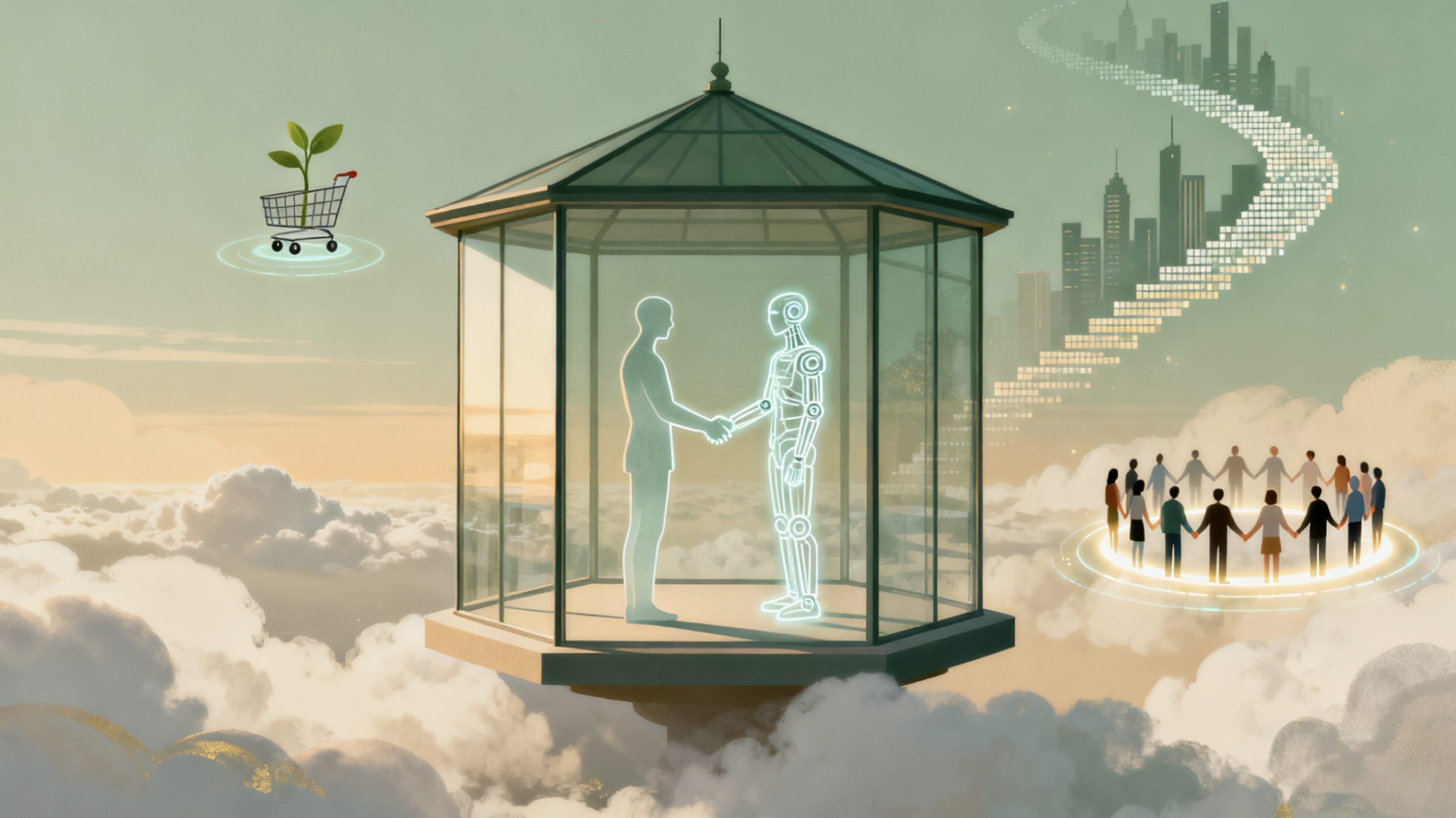
To support a vast network of AI agents and their complex interactions, a PaaS-level Metaverse AI OS has become essential. This operating system serves as the “intelligent backbone” of the ecosystem, ensuring openness, scalability, and efficient collaboration through core capabilities:
- Standardized APIs and SDKs: These lower the barrier to developing AI agent applications and metaverse scenarios, letting more businesses and developers participate.
- Modular AI Capabilities: Built-in or integrated modules (natural language processing, computer vision, reinforcement learning, and knowledge graphs) act as “skill packs” for AI agents, enabling customization for specific tasks.
- Unified Data Management: Centralized data access, storage, and analysis support AI model training and business intelligence, giving agents the “fuel” to learn and adapt.
- Metaverse Infrastructure Support: Features like distributed identity authentication, virtual asset management (integratable with blockchain), and cross-platform communication protocols ensure the metaverse runs smoothly.
The Metaverse AI OS is more than a technical platform—it enables the “autonomous collaborative economic effect,” where AI agents from different sectors interact seamlessly. For example, a gaming AI agent that finds a high-value virtual item (but lacks funds) can automatically call a personal finance AI agent to secure a small “virtual asset-backed loan.” After the transaction, a social AI agent might share the achievement in the user’s communities, triggering further engagement. This synergy creates value greater than the sum of individual parts (1+1>2).
From Concept to Reality: The Three-Stage Evolution of the Metaverse Economy
The shift to a mature metaverse economy is not an overnight leap but a structured, three-phase journey, designed to balance innovation with practicality:
Intelligent Navigation
The first phase focuses on eliminating digital friction in Web 2.0. AI agents—powered by LAM/VLA frameworks—simplify daily tasks for users, from managing subscriptions to comparing products. The goal is to achieve high adoption rates, turning AI agents into indispensable tools that users rely on daily.
Economic Interoperability
Building on the user base from Phase 1, the second phase introduces a frictionless economic layer. Stablecoins become the default medium for transactions, enabling seamless asset swaps across services. This “economic lock-in” not only retains users and partners but also opens new revenue streams, laying a solid foundation for future business models.
Curated Cultural Experiences
With practical utility and a stable economy in place, the third phase introduces targeted virtual activities to build community: limited-capacity virtual concerts, interactive brand events, and community meetups. This “start small” approach minimizes risk, lets developers test user engagement, refine virtual event technology, and grow communities organically—before scaling to larger, more ambitious projects.
The Flywheel Effect: Sustaining Metaverse Growth
The long-term success of the metaverse economy hinges on a “flywheel effect”—a self-reinforcing cycle that builds momentum over time:
- Deliver Exceptional Utility: AI agents solve core user pain points, attracting an initial user base.
- Boost Engagement: As users rely on agents for daily tasks, anonymized data on preferences and behavior is collected, refining AI capabilities and uncovering new opportunities.
- Attract Partners: A growing, engaged user base draws third-party service providers and brands eager to integrate into the ecosystem.
- Establish Economic Lock-In: Stablecoins become the low-friction default for transactions, creating economic loyalty among users and partners.
- Amplify Network Effects: More users, partners, and liquid assets increase the ecosystem’s value exponentially, making it hard for competitors to catch up.
- Drive Innovation: Revenue and data from the flywheel are reinvested into improving AI agents and creating new experiences, further enhancing utility and spinning the flywheel faster.
Toward a More Intelligent, Inclusive Digital Economy
The AI agent-powered metaverse economy is no longer a distant vision—it is a rapidly evolving reality that bridges virtual and physical value, solves longstanding digital friction, and creates new pathways for growth. By prioritizing practicality, openness, and collaboration, this model is laying the groundwork for a digital economy that is more efficient, equitable, and sustainable.
As AI agents scale and ecosystems open up, future possibilities—such as integrating with decentralized governance models—could let communities and AI agents co-shape the metaverse, enhancing autonomy and fairness. The journey ahead has challenges, but the potential to redefine digital commerce and improve lives worldwide is immense. For businesses and users alike, the time to engage with this transformation is now—because the metaverse economy is not just the future of digital commerce; it is the next chapter of how we connect, create, and thrive in a digital world.
Leave a Reply