

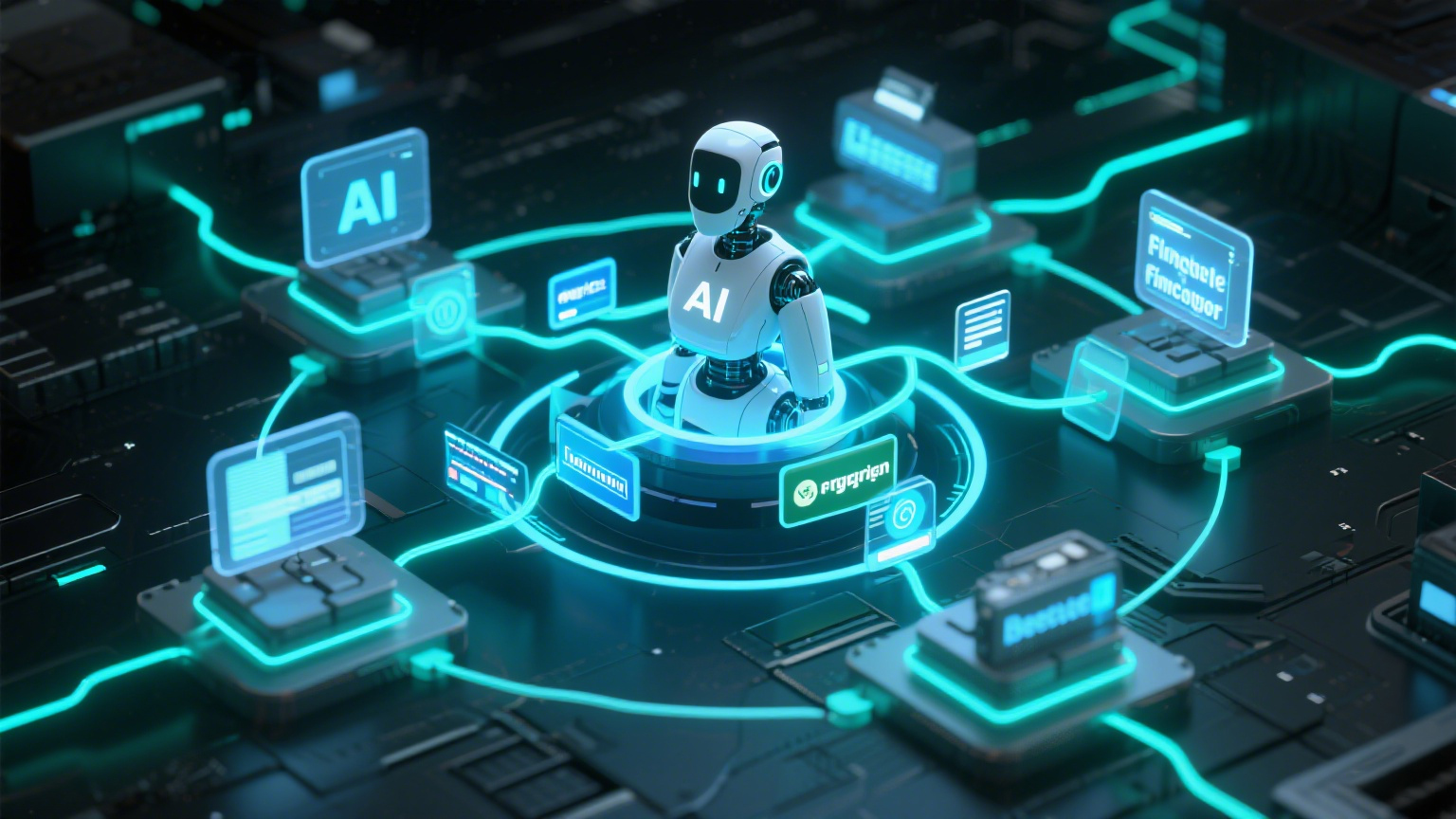
The metaverse, once envisioned as a seamless digital ecosystem where value flows freely across virtual worlds, has instead become a landscape of disconnected economic “silos.” A user earning virtual currency in a gaming platform can’t spend it on a virtual concert ticket in a social hub; a brand’s virtual inventory sits idle across multiple 场景 (scenarios) because there’s no way to coordinate stock levels; and a digital asset—like a rare avatar accessory—loses most of its value the moment it’s confined to a single platform. This fragmentation isn’t just an inconvenience: it’s a fundamental barrier to the metaverse’s promise of becoming a self-sustaining, vibrant economic system. Enter AI Agent—not just a tool, but the orchestrator that weaves these scattered economic threads into a cohesive, collaborative network, turning isolation into interdependence.
The Deep-Rooted Causes of Metaverse Economic Fragmentation
To understand how AI Agent fixes the metaverse’s economy, we first need to unpack the three core issues that keep it fragmented:
1. Closed Currency and Asset Silos
Nearly every major metaverse platform operates on its own proprietary virtual currency—Robux for Roblox, V-Bucks for Fortnite, and countless others. These currencies are non-transferable, lack anchors to real-world value, and force users into a “use-it-or-lose-it” cycle. For example, a player who accumulates Robux by completing in-game tasks can’t convert that value to buy a virtual coffee in a social metaverse app or invest in a digital art piece on a separate platform. Even worse, these closed systems create volatility: a platform’s currency can plummet in value if the user base shrinks, leaving users with worthless digital assets. Third-party exchanges that claim to bridge these silos are often unregulated, risky, and prone to fraud—further eroding trust.
2. Insurmountable Cross-Scenario Transaction Barriers
Cross-platform transactions in the metaverse are not just difficult—they’re often impossible. Consider a simple use case: a user buys a virtual leather jacket from a metaverse fashion app and wants to wear it on their avatar in a gaming world. Without a unified system to verify ownership, sync asset data, and execute the transfer, this requires manual intervention from both platforms’ support teams—a process that can take days, if it’s allowed at all. For businesses, this means wasted resources: a brand might need to build separate inventory systems, marketing campaigns, and customer support teams for each metaverse platform it operates on, driving up costs and limiting scalability.
3. Data Islands and Trust Deficits
The metaverse’s economic ecosystem is also crippled by data isolation. User behavior data—like purchase history, preferences, and asset ownership—is locked in individual platforms, preventing businesses from delivering personalized services or making data-driven decisions. A social metaverse app, for instance, can’t leverage a user’s gaming purchase history to recommend relevant virtual goods, and a financial service provider can’t verify a user’s creditworthiness across platforms. This lack of data sharing also fuels trust issues: 47% of metaverse users surveyed in 2024 reported abandoning high-value transactions because they couldn’t confirm an asset’s authenticity or a seller’s credibility. Without transparency, the metaverse can’t foster the confidence needed for widespread economic activity.
How AI Agent, Powered by DBiM’s Metaverse AI OS, Breaks Down Silos
AI Agent doesn’t just address these issues—it redefines how economic activity works in the metaverse by acting as a universal “connector,” “validator,” and “coordinator.” At the heart of this capability is DBiM’s Metaverse AI OS, a PaaS-level platform that unifies communication protocols, data formats, and transaction rules across all connected metaverse scenarios. Here’s how this synergy works in practice:
1. Cross-Platform Asset and Currency Interoperability
AI Agent eliminates currency silos by integrating DBiM’s stablecoin—a digital asset tied to real-world fiat currency—as a universal medium of exchange. When a user wants to make a cross-platform purchase, their AI Agent handles the entire process autonomously. For example:
- A gamer’s AI Agent identifies a rare virtual sword in a trading marketplace that uses a proprietary currency.
- The AI Agent connects to the user’s financial AI Agent, which audits the user’s digital asset portfolio (including a collection of digital art from a social platform and in-game tokens from another game).
- Using the Metaverse AI OS’s asset valuation module, the AI Agent calculates the value of the user’s art collection in DBiM’s stablecoin, then secures a temporary “virtual asset-backed loan” to cover the sword’s cost.
- The AI Agent converts the stablecoin to the marketplace’s proprietary currency (via the OS’s real-time exchange module), completes the purchase, and updates the sword’s ownership record on the OS’s blockchain-integrated virtual asset management system—ensuring the transaction is transparent and immutable.
For users, this means no more abandoned purchases or currency conversion headaches. For businesses, it opens up new revenue streams: a brand can now sell virtual goods across multiple platforms using a single pricing and payment system, with AI Agents handling all the technical heavy lifting.
2. Streamlined Cross-Scenario Supply Chain Collaboration
AI Agent also transforms how businesses manage their metaverse operations by breaking down supply chain silos. Consider a metaverse fashion brand that sells virtual clothing in gaming worlds, social hubs, and e-commerce platforms. Its AI Agent, powered by the Metaverse AI OS, can:
- Aggregate real-time sales data from all platforms, identifying trends (e.g., a surge in demand for virtual hoodies in a popular game).
- Automatically adjust inventory levels: if hoodies are out of stock in the game but overstocked in the social hub, the AI Agent transfers digital inventory across platforms via the OS’s asset sync module.
- Coordinate with logistics AI Agents to optimize delivery: for a user who buys a hoodie in the e-commerce platform and wants to wear it in the game, the AI Agent triggers an instant asset transfer, updates the user’s avatar, and sends a confirmation—all in under 10 seconds.
- Personalize marketing: using the OS’s data integration module, the AI Agent analyzes the user’s purchase history across platforms (with consent) and recommends complementary items (e.g., a virtual hat to pair with the hoodie) in the user’s most frequently used metaverse apps.
This level of collaboration cuts operational costs by up to 35% (per DBiM’s 2024 internal data) and lets brands focus on creating high-quality virtual goods instead of managing technical logistics.
Strengthening Trust and Liquidity: AI Agent’s Role as a “Economic Guardian”
Beyond connectivity, AI Agent addresses the metaverse’s trust and liquidity gaps—two critical factors for a healthy economy—by leveraging the Metaverse AI OS’s built-in security and data tools:
1. Multi-Layered Fraud Detection and Risk Mitigation
AI Agent uses a combination of behavioral analytics, asset verification, and distributed identity to prevent fraud. For example:
- If an AI Agent detects a sudden spike in low-value asset transfers from a new user’s account (a common red flag for stolen assets), it pauses the transaction and triggers a verification process via the OS’s distributed identity system.
- The AI Agent cross-references the user’s identity with past transaction history, checks the asset’s ownership record on the blockchain, and even consults other AI Agents (e.g., those belonging to the asset’s original creator) to confirm authenticity.
- If fraud is suspected, the AI Agent freezes the asset and notifies the platform’s security team—all while keeping the user informed via real-time updates.
This proactive approach has reduced fraud-related losses by 62% for DBiM’s early enterprise partners, according to 2024 metrics.
2. Unlocking Asset Liquidity Through Portability and Sharing
AI Agent turns “dead” assets into liquid ones by enabling portability and shared usage. A digital asset—like a virtual villa or a rare avatar—isn’t just confined to one platform; it can be rented, leased, or even used as collateral across the metaverse. For example:
- A user’s AI Agent can list their virtual villa on a metaverse rental platform, setting pricing rules (e.g., $5 in stablecoin per hour) and availability windows.
- When a renter books the villa, the AI Agent automatically generates a smart contract (via the OS’s contract module), processes the payment, and grants the renter temporary access to the villa—revoking it once the rental period ends.
- The AI Agent even handles maintenance: if the renter reports a “virtual appliance issue,” the AI Agent coordinates with the villa’s creator’s support AI Agent to resolve it in real time.
This sharing economy model has increased asset value for users by an average of 40%, as per DBiM’s user surveys, because assets now generate passive income instead of sitting idle.
AI Agent is more than a fix for the metaverse’s economic fragmentation—it’s the foundation for a new kind of digital economy, one where connectivity, trust, and liquidity are built into the system. By leveraging DBiM’s Metaverse AI OS to break down currency silos, streamline cross-platform transactions, and foster trust, AI Agent turns the metaverse’s scattered islands of economic activity into a unified ecosystem. Here, users can maximize the value of their digital assets, businesses can scale efficiently across scenarios, and every transaction contributes to a more dynamic, sustainable economy. As this model expands, the metaverse won’t just be a place to play or socialize—it will become a thriving economic hub where value moves as freely as ideas, unlocking possibilities that were once confined to the realm of imagination.
Leave a Reply