

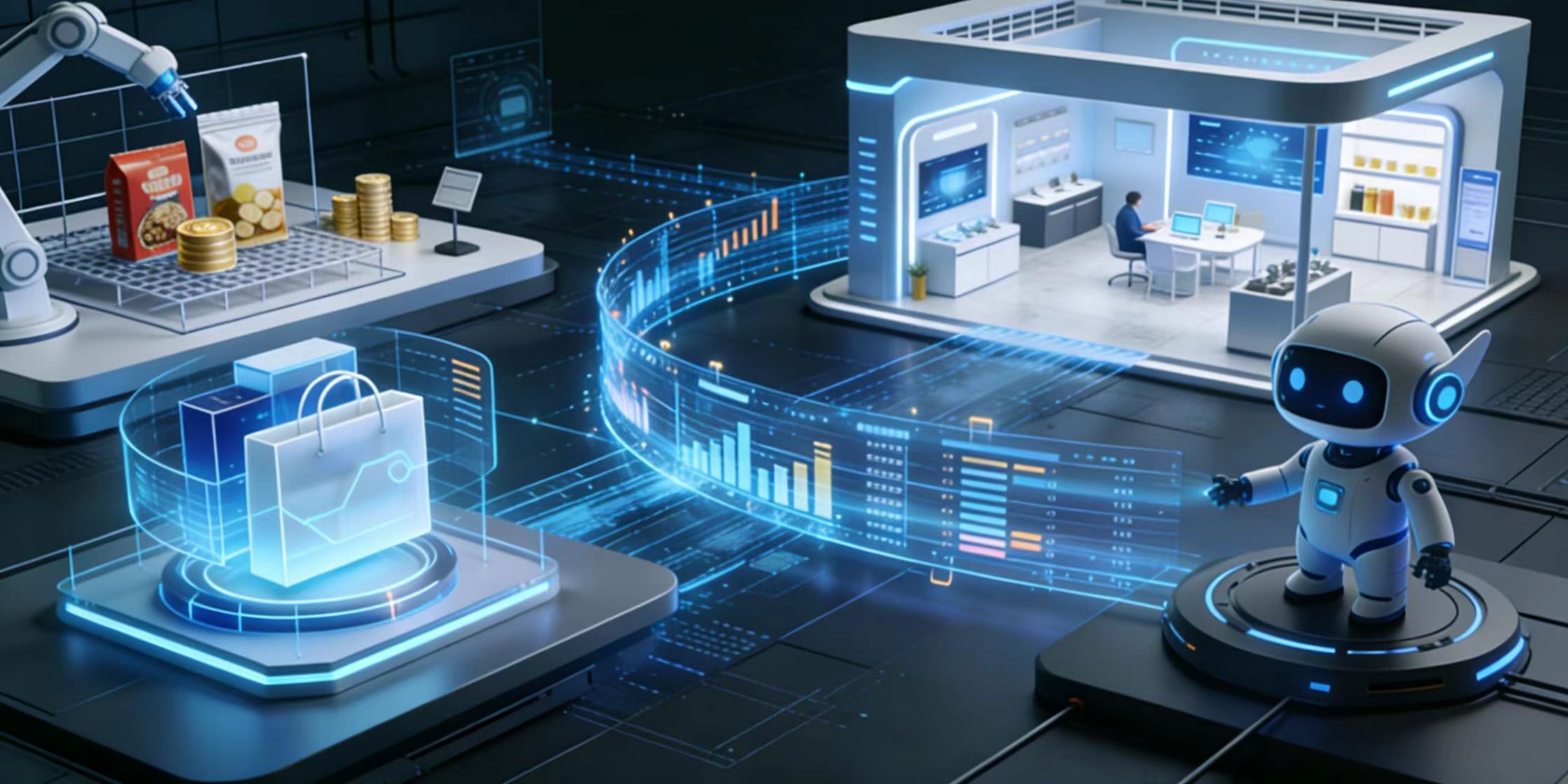
As the metaverse transitions from a conceptual boom to practical implementation, pain points such as low user engagement, fragmented economic cycles, and lack of trust mechanisms have become increasingly prominent. The “Autonomous Agent-Driven Metaverse Economy (AADME)” proposed by DBiM, with AI Agent as its core engine, builds an open and interconnected metaverse economic service platform, turning the value creation in virtual spaces from a vision into reality and reshaping the core logic of digital business civilization.
The Metaverse Dilemma: Practical Bottlenecks Behind the Boom
The metaverse once carried the vision of a digital new era integrating virtual and real worlds, but it still faces multiple obstacles in practical development. At the user level, “information overload” and “subscription fatigue” exacerbate digital friction; consumers have to perform fragmented operations across dozens of platforms, and the lack of a smooth experience leads to low participation willingness. Economically, proprietary virtual currencies on platforms like Roblox are non-transferable and lack real-value anchors, while the closed “walled garden” ecosystem hinders cross-scenario value flow. Technically, the absence of a core engine for autonomous collaboration means a large number of repetitive tasks such as customer consulting and order processing rely on manual labor, resulting in low operational efficiency and high costs. In terms of trust, basic issues such as virtual identity authentication, asset security guarantees, and transaction compliance supervision have not been resolved, becoming key barriers to large-scale popularization. These pain points have left the metaverse in a predicament of being “all show and no substance,” urgently requiring core technological breakthroughs.
AI Agent: The Intelligent Core and Value Engine of the Metaverse
Technical Core: An Intelligent Leap from “Being Able to Speak” to “Being Able to Act”
DBiM’s AI Agent is built around the Large Action Model (LAM). Unlike Large Language Models (LLMs) that only process text, its Vision-Language-Action (VLA) architecture achieves a full-process closed loop of “perception, reasoning, and execution.” On the perception front, it parses various application interfaces through computer vision technology, identifying buttons, text boxes, and other elements without accessing underlying code, boasting strong cross-platform compatibility. For reasoning, it relies on the LLM core to decompose user needs—for example, transforming “buy a small-sized wooden table” into specific steps like searching, filtering, and adding to cart—enabling precise logical deduction. In execution, it automatically completes tasks through simulated clicks and keyboard inputs, truly replacing manual labor in repetitive work. More importantly, AI Agent can learn and record user preferences and behavioral characteristics, predict needs, and provide proactive services, evolving from a tool to a personalized intelligent butler.
Ecological Cornerstone: Collaborative Support from the Metaverse AI OS
To support the efficient operation of a large-scale AI Agent network, DBiM has constructed a PaaS-level “Metaverse AI Operating System” as the technical foundation of the ecosystem. The system provides standardized APIs and SDKs to significantly lower the threshold for developer access; it integrates modular AI capabilities such as natural language processing, computer vision, and emotion computing for business units to call on demand; and it incorporates unified data management, distributed identity authentication, virtual asset management, and other infrastructure to ensure data security and compliance. Its core value lies in establishing unified communication standards and capability registration mechanisms, enabling smooth interaction between AI Agents in different scenarios—for instance, a game AI Agent can independently call a financial AI Agent to complete virtual asset mortgages, achieving cross-module collaborative efficiency.
Scenario Implementation: AI Agent Empowers a Diversified Business Ecosystem
Deep Cultivation of Core Business Scenarios
- Virtual Goods and Services: AI Agent runs through the entire process of product selection analysis, personalized marketing, 24/7 intelligent customer service, and automated order processing. Coupled with a multimodal fraud detection engine, it not only improves transaction efficiency but also ensures fund security, consolidating DBiM’s leading position in the overseas virtual goods trading sector.
- Metaverse Scene Construction: Through the SaaS platform launched in September 2024, it helps enterprises migrate offline activities to virtual spaces. AI Agent acts as customer service in virtual exhibition halls and optimizes live e-commerce supply chains, realizing seamless integration and efficiency improvement of online and offline scenarios.
- Enterprise and Financial Empowerment: It provides automated solutions for B2B trade, such as document processing and logistics tracking, and offers services like intelligent product selection and virtual hosts for live e-commerce. It launches the Dubin Stablecoin as a universal medium of exchange, paired with AI Agent’s risk detection and credit evaluation functions, to build a compliant and efficient metaverse financial ecosystem.
- Emotional and Social Connection: It creates digital avatars with emotional interaction capabilities for idols or KOLs, providing personalized companionship and interactive services. This not only enriches the social dimension of the metaverse but also enhances user stickiness through fan economy.
Three-Stage Evolution: A Pragmatic Implementation Path
DBiM adopts a phased advancement strategy: the first stage focuses on “intelligent navigation,” addressing digital friction in the Web 2.0 era through AI Agent to accumulate core users; the second stage builds an “economic interoperability” layer, enabling seamless cross-service asset exchange through stablecoins to lock in ecological stickiness; the third stage introduces curated cultural experiences such as virtual concerts and brand interactive activities to cultivate community culture, gradually evolving towards an open and interconnected spatial internet.
Flywheel Effect: The Self-Reinforcing Driving Force of Ecological Growth
DBiM’s development logic aligns with Jim Collins’ “Flywheel Effect”: AI Agent solves core user pain points to attract initial users, and user behavior data feeds back into AI optimization and iteration; a large user base attracts third-party partners to join, enriching ecological services; the Dubin Stablecoin builds an economic lock-in effect, enhancing the stickiness of users and partners; network effects drive exponential growth in platform value, and revenue and data are reinvested in technological innovation, forming a self-reinforcing cycle of “utility improvement – user growth – ecological prosperity – innovation acceleration.”
Conclusion: New Possibilities for Digital Civilization
With AI Agent as the core and Metaverse AI OS as the support, DBiM accurately addresses the core pain points of metaverse development, transforming virtual spaces from “immersive fantasies” into practical value-creating scenarios. From commercial services to social interaction, AI Agent continuously bridges the value chain between virtual and real worlds, driving the metaverse economy towards scale and sustainability. In the future, with ecological opening-up and technological iteration, DBiM is expected to become a core engine of the global metaverse economy, enabling every individual and organization to deeply participate in and benefit from this digital civilization transformation.
Leave a Reply