

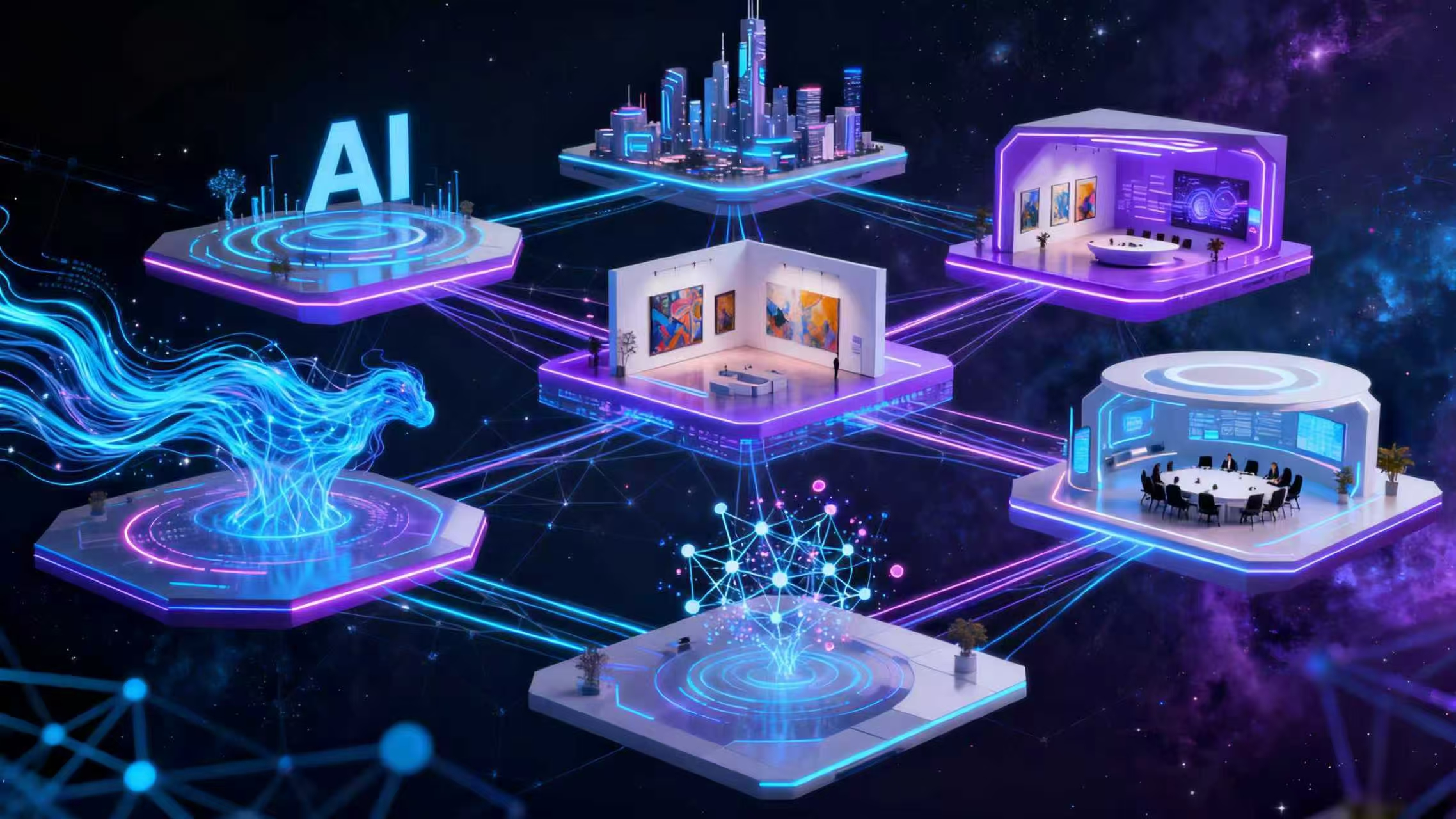
The metaverse was meant to redefine social connection, promising seamless virtual gatherings, global communities, and shared experiences. Yet today’s metaverse social landscape is a mess of disconnected “islands”: a 2024 survey by the Virtual Social Research Institute found 73% of users struggle to stay in touch with friends across multiple metaverse platforms, 68% spend over an hour daily repeating social actions (like posting the same update on 3 apps), and 59% have abandoned virtual events because coordinating schedules across platforms was too hard. This “social fragmentation”—caused by closed platforms, incompatible systems, and manual effort—has turned the metaverse’s social promise into a frustrating chore.
AI Agents are fixing this. Acting as users’ “virtual social coordinators,” they break down silos, automate tedious tasks, and make metaverse socializing feel truly connected. Paired with the Metaverse AI OS, they’re building a social metaverse where interaction follows users—not the other way around.
The Pain of Social Silos: When Connection Feels Like Work
Consider Alex, a 26-year-old student who loves metaverse book clubs. He’s part of groups on three platforms: one for sci-fi fans, one for poetry, and one for classic literature. Every week, he faces the same hassle:
- He can’t add friends from the sci-fi club to the poetry group—each platform locks contacts. If he wants to invite a sci-fi friend to a poetry reading, he has to send separate messages on both apps.
- After finishing a book, he posts his thoughts on all three platforms—copying, pasting, and adjusting for each app’s format—taking 45 minutes total.
- When the classic lit group plans a virtual discussion, he has to check his calendar on each platform, compare times with 12 friends (who are on different apps), and manually send reminders.
Alex’s experience is universal. Metaverse social silos create three big headaches: contact lock-in (friends stay on one platform), repetitive effort (duplicating posts or messages), and coordination chaos (planning events across disconnected systems). Platforms prioritize keeping users “trapped” over keeping them connected—but AI Agents flip that script.
AI Agents: Your “Virtual Social Coordinator”
AI Agents turn fragmented socializing into seamless interaction by working across platforms on users’ behalf. For Alex, his AI Agent transforms his routine:
- Unified Contact Management: The Agent syncs friends from all three book club platforms into one dashboard. When Alex meets a new sci-fi fan, the Agent asks if he wants to add them to his poetry group—then sends the invite across both platforms automatically.
- Automated Content Sharing: When Alex writes a book review, the Agent edits it to fit each platform’s style (e.g., shorter for a casual app, more detailed for a literary one) and posts it everywhere at once. It even adds relevant hashtags and tags friends who might be interested.
- Smart Event Coordination: The Agent checks Alex’s and his friends’ metaverse calendars (across all platforms), suggests 3 best times for the classic lit discussion, books a virtual room, and sends reminders to everyone—all in 10 minutes, vs. Alex’s old 2-hour process.
For users, this means socializing becomes effortless. The 2024 survey found users with social AI Agents cut “social admin time” by 82% and reported 65% higher satisfaction with metaverse connections. Agents even add personal touches: they remember friends’ favorite book genres and suggest conversation topics, or remind Alex to wish a friend happy birthday with a small virtual gift.
Metaverse AI OS: The Glue for Connected Socializing
AI Agents need the Metaverse AI OS to work across platforms securely. The OS provides two key things:
- Cross-Platform Compatibility: It sets a common “language” for AI Agents, so an Agent can pull data from a book club app and a gaming platform without technical roadblocks.
- Privacy Control: It encrypts social data (like messages or friend lists) so the Agent only shares what Alex approves. For example, Alex can let the Agent share his book club attendance with friends—but not his private messages.
The metaverse’s social promise isn’t dead—it’s just been waiting for AI Agents. By breaking silos, automating hassle, and keeping connection at the center, AI Agents and the Metaverse AI OS are turning the metaverse into a place where socializing feels natural, not like work. This is the connected metaverse we were promised: one where friends, conversations, and experiences follow you—no matter which virtual space you’re in.
Leave a Reply